
Use case · Market & SEO research
SERPs, the pages that win them, and the gaps, mapped.
The results for every search in your market — who ranks, what they wrote, and the questions nobody has answered yet.
No credits. Your machine. Your keys.
- in
- your market’s search terms
- out
- who ranks, what they wrote, what is missing
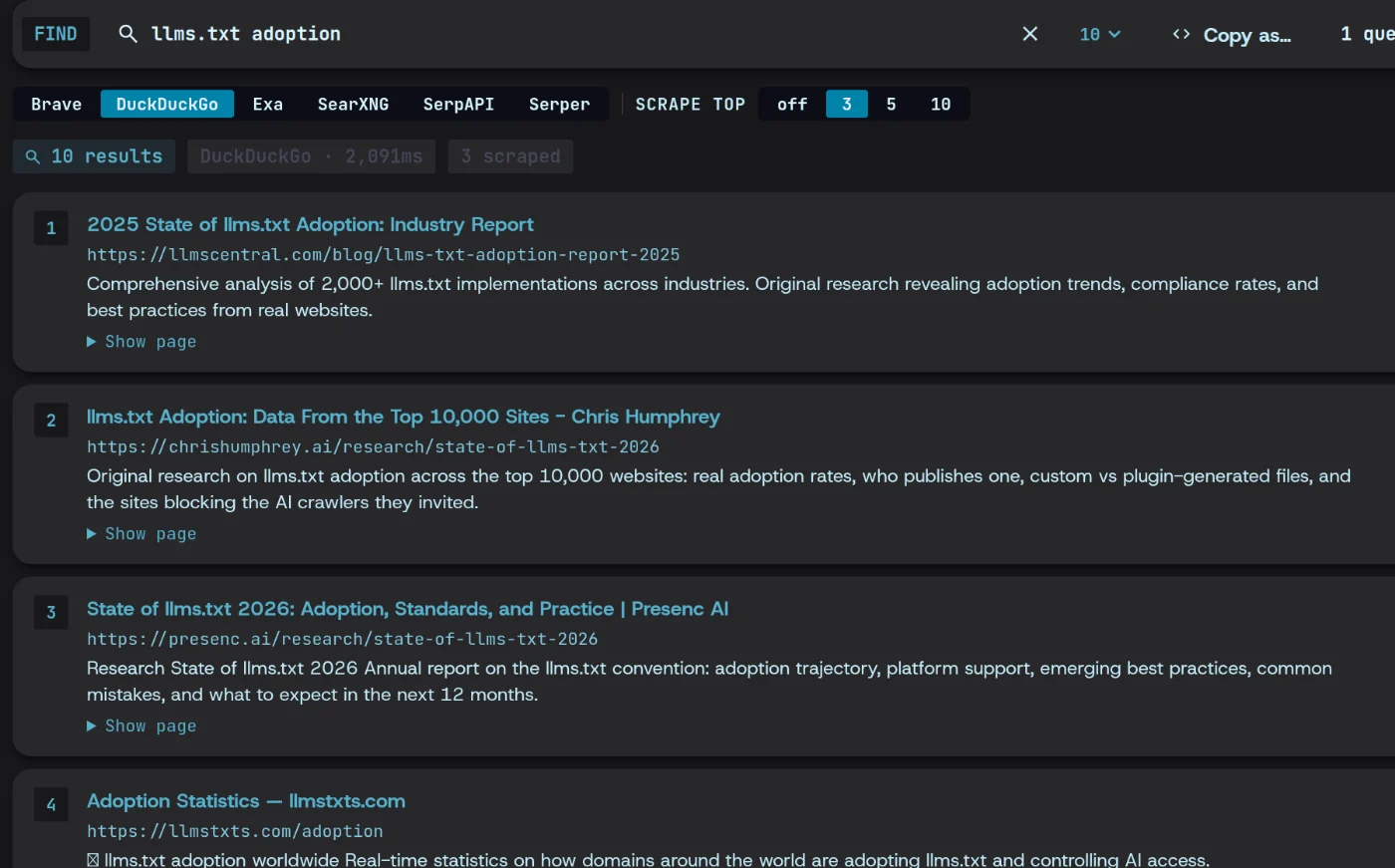
The old way vs Magpie
A sample of the market, or the market.
The old way
- You check rankings in an incognito window and call it research.
- The rank tracker shows positions but never what is on the page that beat you.
- Reading the pages that beat you means opening each one, one tab at a time.
- Per-keyword pricing means you track forty terms and guess at the other four hundred.
With Magpie
- Search every term from your own machine, up to fifty results deep, on whichever engine you trust.
- Magpie opens the pages that rank, so you can read what they actually cover.
- Ask Research a question about the market and it answers from those pages, every claim tied to its source.
- Flat $49 a month, so map the whole market instead of a sample of it.
How it works
From a search to a map of the market.
01Search
Give it your terms
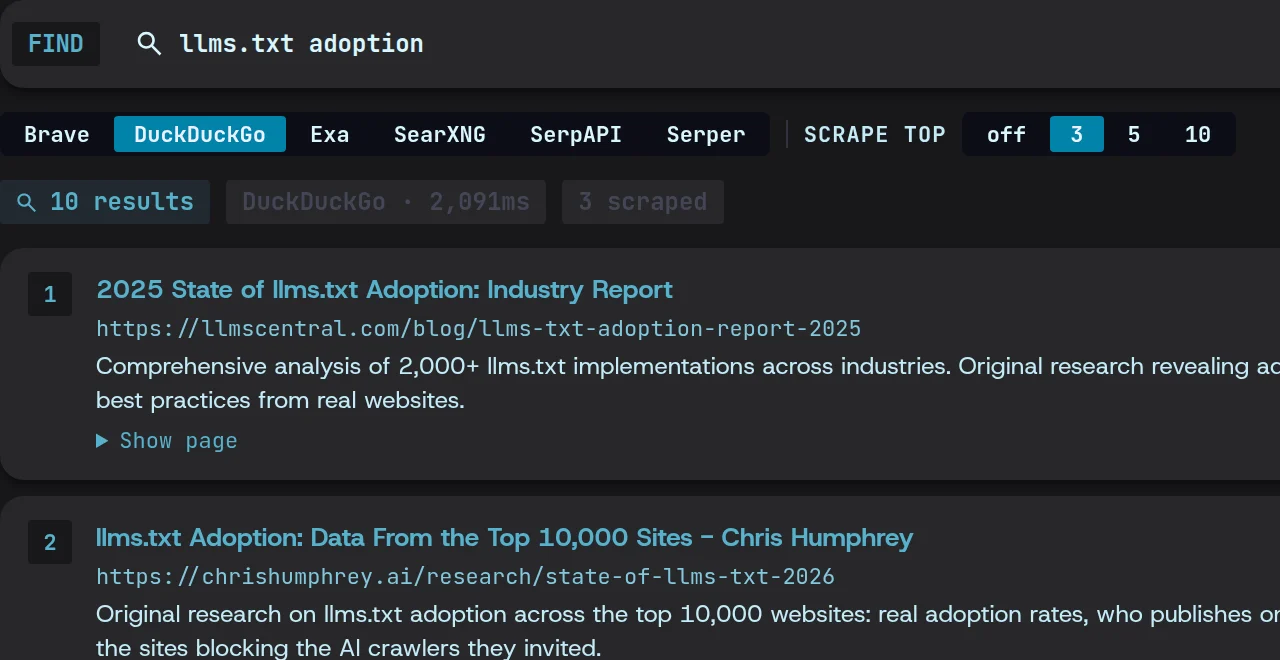
Type the searches your buyers actually type. Magpie brings back up to fifty results for each, from the engine you pick.
02Read
Read what ranks
Magpie opens the top results in the same search and brings back each page’s text, ready to read, scrape or crawl.

03Research
Find the gap
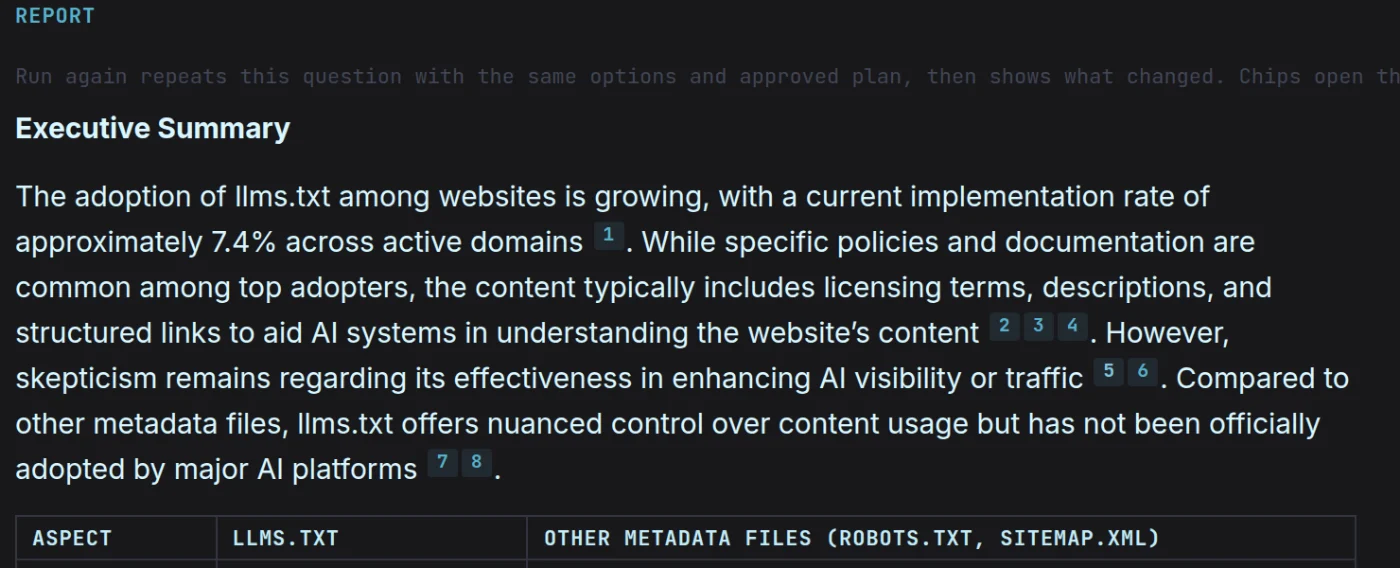
Ask Research what the market says on a topic. It compiles a report from the pages, each claim tied to its source, so what nobody covers stands out.
What you get
What a search brings back
One row per result: where it ranks, what it is called, and the page itself, ready to open.
| position | title | url |
|---|---|---|
| 1 | Desktop scraping without credits | vero-supply.co/blog/desktop-scraping |
| 2 | The local-first scraper guide | hallidaylabs.io/guides/local-first |
| 3 | Scrape the web from your laptop | northwind.io/blog/laptop-scraping |
- position
- 1
- title
- Desktop scraping without credits
- url
- vero-supply.co/blog/desktop-scraping
50 results for this search
Questions
Market & SEO research, answered.
What is a SERP, in plain terms?
The search engine results page — the list you get back for a search. Magpie brings back each result’s position, title, address and snippet, and can open the pages themselves.
Is this allowed?
Magpie asks the search engine you pick — DuckDuckGo needs no key; Brave, Serper and the others use your own — and opens the public pages that rank from your own machine, at a pace you set.
How is this different from a rank tracker?
A rank tracker gives you the position. Magpie brings back the page as well, so you can read what the winner actually wrote.